

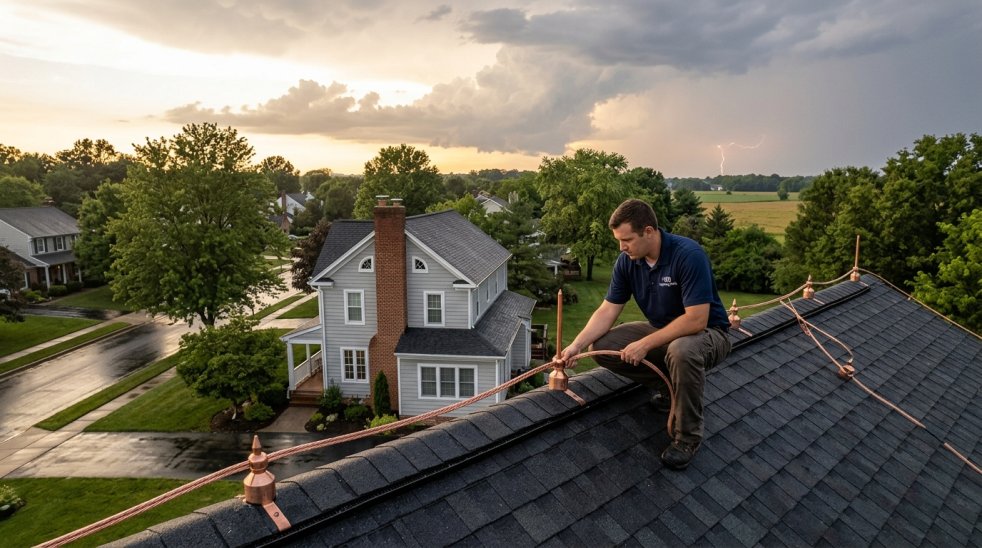
How Lightning Rods Protect Your Home
What Every Homeowner Should Know
Lightning is one of nature’s most powerful and unpredictable forces. A single bolt can carry up to 1 billion volts of electricity and heat the surrounding air to about 50,000 °F, roughly five times hotter than the surface of the sun. When that energy meets your home, the results can be catastrophic: fires, structural damage, damaged electrical systems, and tens of thousands of dollars in repairs. That’s where lightning rods, part of a proper lightning protection system, come into play.
Lightning protection systems, historically developed and refined over centuries, are designed to give lightning a safe path to the ground, keeping it away from the structure and occupants inside. They don’t prevent lightning from striking, but when installed correctly, they dramatically reduce the likelihood that a strike will damage your home.
What a Lightning Rod System Does
A lightning protection system is more than just a metal rod on your roof; it’s a network of engineered components that work together to redirect lightning safely into the ground:
-
Air Terminals (Lightning Rods): These conductive metal rods, typically made from copper or aluminum, sit at the highest points of your home to provide the most likely entry point for a strike.
-
Conductors: Heavy-gauge cables run from the rods down to grounding electrodes. They create a low-resistance path for electricity to follow instead of forcing its way through your home’s structure.
-
Grounding System: Ground rods buried in the earth dissipate the electrical energy safely below ground level.
By offering a controlled route for lightning’s electrical energy, the system reduces the risk of fire, structural damage, and secondary electrical problems caused by uncontrolled surges.
Why Lightning Rods Matter for Your Home
Lightning isn’t just a dramatic sky show; it’s a serious safety issue. Even though the statistical likelihood of your home being struck directly is low, the consequences can be severe when it does happen.
Here’s why a lightning rod system can be worth considering:
-
Fire Prevention: Direct strikes can ignite combustible materials in walls, attics, or roofing. A proper lightning protection system channels that energy away before it causes ignition.
-
Electrical System Protection: Without a safe pathway, lightning energy can enter your electrical panel, fry circuits, and damage appliances and electronics.
-
Structural Safeguarding: Lightning can crack masonry, blow holes in roofs, and damage framing. Lightning rods help minimize these structural impacts by directing current away from vulnerable areas.
-
Peace of Mind: Knowing that your home has an engineered system designed to handle one of nature’s most powerful phenomena can relieve worry during severe storm seasons.
Placement and Professional Installation Matter
For lightning rods to do their job, they must be installed and bonded correctly to a grounding system that meets national safety standards. Professional installation ensures:
- All components are properly connected.
- Grounding resistance is low enough to safely dissipate strike energy.
- The system follows recommended design practices, so the protection radius covers your home effectively.
Is Lightning Protection Right for Your Home?
Not every home needs a lightning rod system, but for many homeowners — especially in storm-prone regions — the potential to prevent devastating damage makes it a worthwhile investment. Consider your local storm frequency, home design, and insurance coverage when evaluating your risk. A professional assessment can help you make the right decision.
Ready to Protect Your Home?
Don’t wait until a storm rolls in to think about lightning safety. Schedule a lightning protection consultation with a qualified installer to evaluate your home’s risk and get a custom-designed system that meets national safety standards. Protecting your home before disaster strikes is one of the smartest steps you can take toward long-term peace of mind.